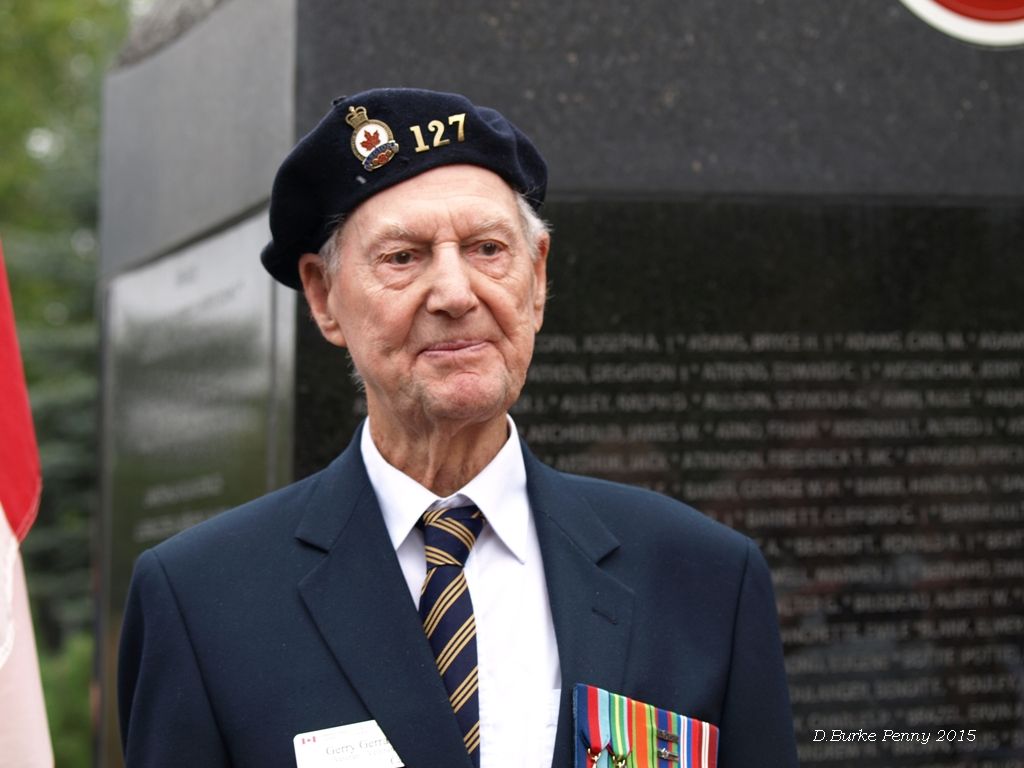
For the first time, my wife and I attended the Remembrance Day ceremony at the National War Memorial in Ottawa. We also laid a wreath at the Hong Kong Memorial Wall on behalf of the families of Royal Canadian Corps of Signals men who fought in the battle of Hong Kong in December, 1941.
Sadly, only one member of the group of 33 signallers who went to Hong Kong is still alive: Gerry Gerrard, from Victoria. He is a fine gentleman and we couldn't ask for a better representative of our now gone very special members of our families.
An occasional blog about the book, "Beyond the Call", and the men of the Royal Canadian Corps of Signals in Hong Kong and Japan, 1941-45. Available from www.hkvca.ca
Monday, November 13, 2017
Thursday, December 22, 2016
Unholy Christmases
Seventy-five years ago
this Christmas, decorated trees, presents and singing carols were likely not on
the minds of Canadian troops caught up in the losing battle of Hong Kong. But it would certainly be a day they would
remember, and not particularly fondly, with a surrender to the Japanese the
order of the day. Far away from families and with an unknown future ahead of
them they had seen friends killed and wounded and at least heard about numerous
atrocities committed by enemy soldiers. Now seventy-five years later it’s
important that we remember too.
For those of us who had
relatives there in Hong Kong we have a very personal connection to that
Christmas of 1941. In my case, it was my uncle, Donald Penny, a Corporal in the
Royal Canadian Corps of Signals. I don’t
know for sure where Don was on December 25, 1941, but from the various accounts
I’ve read he was with a small RCCS unit attached to East Brigade providing
communications links between the Royal Rifles of Canada and Fortress
Headquarters. Fellow Signals NCO Ron Routledge later said in an interview,
“Surrender? Well, I recall being, well everyone had to, we had to stockpile all
our arms in one particular place in a field and wait for orders from the
Japanese...”
Any feelings of
uncertainty I have about my uncle’s whereabouts that day pale in comparison to
what his family must have been going through seventy-five years ago. They knew about the battle in Hong Kong but
had no idea if Don was alive, wounded or dead.
An article in the Vancouver Sun
from December 26th reflects the lack of information available to
family and friends back in Canada.
It wasn’t until
November, 1942 that Don’s family received official word that he was a Prisoner
of War. Weeks later he and his fellow
Canadian POWs would spend their first Christmas in captivity, most of them
half-starved and malnourished in Sham Shui Po camp on the mainland of Hong
Kong. On November 29th the camp received the first Red Cross parcel
distribution. As Signalman Walter
Jenkins said, “...we all would have died in Hong Kong, you know, if it hadn’t
been for the Red Cross.” One of my uncle Don's notebooks has a page showing the Red Cross parcel distributions while he was a POW.
On Christmas Eve the men received their first official
word from home, a message from the Prime Minister, Mackenzie King:
The
Prime Minister of Canada requests the International Red Cross Committee to
convey to all Canadians in prisoner of war or internment camps, on behalf of
their relatives and friends in Canada, and also on behalf of the Canadian
government and Canadian people, heartfelt Christmas greetings and best of
wishes for the New Year.
The Prime Minister desires to
assure them, one and all, that the thoughts of the Canadian people were never
more of them and with them, than they are in the greetings they send at this
Christmas season, and in the Wishes they send for the New Year.
The men also received a
ten-yen note that could be spent in the camp canteen. Signalman Ray Squires called it a “Godsend”
buying among other things a half-jar of malt and codliver oil. Christmas dinner
was a huge improvement on their usual evening meal. Tins of “Meat and
Vegetables”, potatoes and even plum pudding were on the menu. Services in the church hall included singing
carols – a muted celebration to be sure, given the terrible conditions they
were enduring as POWs, but still a time filled with more pleasant thoughts of
home.
In early 1943, Don was
one of about 600 Canadians transported to Japan. He and a few other Signallers ended up in a
camp near Tokyo; they were to be used as slave labour in a shipyard. Christmas that year was described by Canadian
officer, Capt. John Reid:
Two small pine trees we got today
and some decorations. This day a holiday
was used for putting up decorations the men made themselves from scraps of this
and that, they even made a fireplace with an electric light in it; it looked
like a real fireplace, they made an amazing job.
One of Don’s mementos brought back from Japan was a mimeographed sheet of Christmas carols. On the
reverse side he had made some notes about that Christmas. His poignant letter home three weeks later put the Christmas celebrations into context.
By December, 1944, life
in Camp 3D had taken on a sense of anticipation. American bombers had begun
runs over the Tokyo area giving the men new hope for a return home. The arrival of more Red Cross parcels also
boosted morale. Preparations for
Christmas went into high gear. Secret orders went out for materials that could
be scrounged or stolen from the shipyard and turned into decorations. Again,
Capt. Reid described the scene:
Christmas
again this year was very successful – the men made very amazing decorations,
with streamers and fireplaces and santa clauses and so on – really amazing and
all made out of scraps gathered from here and there. In the morning we had white rice, a great
delicacy and soup with leeks and carrots and twenty kilograms of meat. The leeks to flavour it were a wonderful
delicacy. At noon each man had one loaf of bread with some miso paste. Leek soup, Christmas pudding – two parts
flour to one of sugar. For supper fish,
one hundred and twenty-five grams per man, white rice, soya soup, and sweet
beans with sugar and Christmas pudding.
Red Cross parcels arrived in the camp and were issued one per man on
Christmas eve. The Church Service and
Christmas carols on Christmas Eve, a concert by the orchestra and the Japanese
again came in Christmas afternoon and took photos.
Although
the trappings reflected the Christmas spirit, there was also a reminder of
their situation as POWs. On the wall
across the aisle from one large wreath, the men had hung an imitation scroll,
hand-lettered by Signalman Will Allister:
We said: “By Xmas ‘42
We know the war will all be
through.”
We said: “By Xmas ‘43
We know that we will all be
free.”
We said: “By Xmas ‘44
We know there will be war no
more.”
But now? “By Xmas ‘45
I hope to hell
we’re still alive.”
As
it turned out, not only were the men of the Signal Corps at Camp 3D alive, by
December, 1945 they would be back home in Canada celebrating a truly joyous
Christmas with their families.
Monday, June 13, 2016
Beyond the Call Featured at Local Authors Event, June 11, 2016
It’s always nice to have an opportunity to share the story
of “C” Force and tell people about our Canadian soldiers in Hong Kong and
Japan. I was able to take advantage of
such an opportunity on Saturday (June 11) when I was invited to participate in
a “local authors” event sponsored by Midland’s independent bookstore, Georgian
Bay Books. The store carries numerous
titles by writers from the area, including Beyond
the Call.
I had the chance to talk with many folks who were in town to
participate in the annual “Butter Tart Festival” and found (as usual) that
although everybody had heard about Pearl Harbor, very few knew anything about
Hong Kong. There was lots of interest in the stories of how
our Canadian troops were involved, the battle and the subsequent incarceration
by the Japanese. I even sold a few
books!
Wednesday, November 11, 2015
November 11, 2015
Today I'm thinking about all the Hong Kong veterans who served their country. In particular, I remember the members of the RCCS who inspired me to learn and write about their stories. We will remember them.
Monday, August 24, 2015
VJ Day Ceremonies – Ottawa, August 15, 2015
I attended two ceremonies in Ottawa to commemorate
the 70th Anniversary of Victory over Japan Day. The official
Canadian Government event was held at the National War Memorial and had all the
pomp and ceremony expected at such events.
At the Hong Kong Memorial Wall a small group of Hong
Kong veterans, their families, and many members of the Hong Kong Veterans
Commemorative Association (HKVCA) gathered to honour and pay tribute to the men
of “C” Force. It was at times solemn, at
other times uplifting, and most of all a time to feel part of a close and special
family.
Veteran Phil Doddridge (RRC) spoke words of
remembrance and RCCS veteran Gerry Gerrard laid a wreath.
Gerry is the last surviving member of the Signal
Corps unit that was part of the (often forgotten) Brigade Headquarters group. It was great to see him again, having
travelled all the way from Victoria, B.C. – still going strong at age 94!
Monday, August 10, 2015
VJ Day, August 15, 2015
![]() |
| (http://www.veterans.gc.ca/eng/remembrance/history/second-world-war/southeast-asia/gallery/vj-day) |
It has been quite some time since I’ve
posted to this blog, but I thought that the 70th anniversary of the
end of the war against Japan - VJ Day - deserved some attention. In Beyond the Call I describe what
happened at the various camps in Hong Kong and Japan where members of the RCCS
were being held prisoner. Here are excerpts
from some of those descriptions:
Sham Shui Po, Hong Kong
Official word of
the surrender was communicated on August 16 to the senior British officer, who
then took over administration of the camp.
Ray Squires:
The
flag [Union
Jack] was officially raised this
morning. It was the most impressive
ceremony I have ever seen. Nearly all
the officers and men had tears in their eyes.
The ceremony was peculiar because there was not a Jap in sight they have
all quietly left, and there was no presenting of arms because we didn’t have
any.
Niigata Camp 5B, Japan
[On August 15] the Emperor’s message of
surrender was broadcast in the camp.
When one of the POWs who spoke Japanese told the rest of the men what
was being said, there were hugs all around.
Rations for the evening meal were doubled and the prisoners at Niigata
5B gathered around in small groups digesting their dinner and the incredible
news that the war was finally over.
Howie Naylor recalled,
The
guard told us the war was over. Then
when some Corsairs came over and buzzed the camp, we knew it was true. Every prisoner in the camp had tears in his
eyes when he saw those planes.
Ohasi Camp, Japan
On August 15 the prisoners were at work
when it was confirmed that Japan had surrendered. Gerry Gerrard remembered it this way:
It
was about noon…I got the word, pass the news around. In the workplace there were these
loudspeakers and the Japs had to go to these speakers and listen to these
speeches – they were letting them down easy.
So by the time we got back into camp, everybody knew that the war was
over. But there was no sign that the
Japs knew. Next morning we had to get up
– of course ready to go to work – and we go to parade and there’s no Japs
around. They just disappeared overnight.
Blacky Verreault wrote in his diary that
there was still a lot of uncertainty – was it really true? But by the end of the day on the 16th
the reality of peace was finally being accepted and embraced.
Sumidagawa Camp, Japan
Through July and into August the heavy
bombing raids on the Tokyo area were witnessed by the POWs at Sumidagawa. There were no air raid shelters around the
camp so the men watched “the nightly festivities” from the windows in their
hut. Then, in mid-morning of August 15, the workers were sent from the loading
platforms back to the camp. This was
unprecedented and suggested something had changed. As the men returned, rumours started to
spread that the war was over. Few would
let themselves believe it, so around mid-afternoon, the senior POW officer was
prompted to request an interview with the camp commandant. He returned about half an hour later. Will Allister wrote about that moment:
“With
regard to a certain rumour!” and the taut, hollow face opened like a broken
dyke letting through a rushing wave of joy for the first time, transforming it
into a strange, scarred, radiant smile.
“IT…IS…SO!”
The
hut exploded in a wild exultant Yankee-Limey-Scottish-Dutch-Indonesian-Canadian
thunder of victory, of pent-up souls erupting, smashing the shackles of seeming
limitless defeat in a great triumphant jungle roar! Men charged down the aisle, whooping and
bellowing, leaping and cheering.
Sendai No. 1 Camp, Japan
By mid-August there were numerous
sightings of U.S. fighter planes around the camp and B-29s flying
overhead. On the 15th the men
were at the mine, but no work was done.
Rumors fuelled by civilian workers spread: the war was over. There was still no official word on the 16th
but finally the next day the camp commandant told the men officially that the
war had ended. Capt. Reid described the
reaction:
The
thing had been going on for so long, when the war was over you refused to let
yourself think it was possible. It came
so gradually, the civilians telling us, and then the official word and then the
war really being over, and there was no moment of great celebration but
everybody was happy.
Sendai No. 2 Camp, Japan
In August, the men at Sendai No. 2 were
seeing the same flights of B-29s as were noticed at the nearby camp. Then one day, work was halted and the men
were gathered on the parade ground. The
camp commandant, who had never spoken a word of English to the prisoners
before,
…came
out, stood on a box and said, in perfect English he said, “My dear boys! You’re allowed…You’re free to go home to your
mothers, wives, sweethearts,” and that was it.
Don Beaton remembered their reaction: “…it was like running into a brick wall. We just stood there stunned and then
everybody went a little crazy.”
Even though the war was over, it would
take anywhere from six to eleven weeks before all the men would complete their journeys back to their homes in Canada.
Tuesday, November 6, 2012
Remembrance Day 2012
The Sai
Wan Bay
War Cemetery
is situated on the northeast side of the island
of Hong Kong , a short distance from
the bustling city of Victoria . The graves of two hundred and eighty-three
Canadian soldiers are located here, including five members of the Royal
Canadian Corps of Signals. It is quiet
and serene with dramatic rows of white grave markers stretching on and on down
a slope towards the sea, against a panoramic view of distant wooded hills. Further south on the island on the Tai Tam Peninsula is Stanley Military
Cemetery . Twenty Canadians are buried here including
four Signals. The graves are located on
a hillside flanked by grassy slopes with flowering shrubs and ornamental trees. The peace and tranquility of these two sites
belie the events of December, 1941 when the island hills were the scene of
fierce and bloody fighting as the days of the battle for Hong
Kong raged on. (From Prologue, Beyond the Call)
![]() |
| Sai Wan Bay War Cemetery |
On Remembrance Day, we think about those
who gave their lives in service to our country.
Young men such as members of the RCCS: Jim Horvath, John Little, Tom
Redhead, Ernie Thomas and Wes White, buried at Sai Wan, and Bob Damant, Bud Fairley, Hank
Greenberg and Charles Sharp, buried at Stanley.
![]() |
| http://www.veterans.gc.ca/eng/collections/virtualmem/photoview/2815403/63145 |
We also remember those who through sheer luck,
fortitude, or unexplained miracles made it back to Canada. Knowing what the men of “C” Force went
through during the battle of Hong Kong, and for more than three and a half
years as POWs, it truly does seem a miracle that any of them survived. In particular, because I know their stories
best, I will be thinking about the thirty-three men of the RCCS, those who died
in Hong Kong, and those who made it back.
Only two are still with us today – Gerry Gerrard and Wally Normand, both
fine gentlemen and proud veterans. I
salute them all.
Wednesday, January 11, 2012
Draft to Japan, January, 1943
In early January, 1943, after being POWs in Hong Kong for just over a year, about 1200 men were identified for transport to Japan. Among the 663 Canadians selected were eleven members of the R.C.C.S., including my uncle, Don Penny. Signalman Will Allister described the physical test to determine their eligibility: “We were lined up for a fitness test – we must be able to work in Japan. We were each instructed to walk across the road. Those who made it were pronounced physically sound, A-1 category.” (Where Life and Death Hold Hands) Capt. John Reid, a medical officer, was the only Canadian officer allowed to go. In his post-war report he told what happened next.
We were isolated in the barracks at Hong Kong for a week before we left during which time we were vaccinated for cholera, dysentery, typhoid and they slipped a glass rod up everybody’s rectum. I don’t know what you could find out except worms, a very poor way of going after stool,... (Reid, 1945, DND Directorate of History and Heritage, File 593, D17)
Among the Signals I talked to, there seemed to be agreement that the selected men were anxious but generally ambivalent about being sent to Japan. As Gerry Gerrard said, “You didn’t know whether it was going to be for better or for worse. I couldn’t see it being any better, because you had to figure that food wise it couldn’t be that great in Japan, we sure weren’t going to get our share, and just before we left there was a supply of Red Cross that came in.” Jim Mitchell was worried about submarines, Bob Acton thought they might receive better treatment there, and Will Allister said at least the move gave them some hope.
On January 17 the men in the draft were issued some new clothes including running shoes, but they had to give up their boots. On the morning of the 19th they were marched to the wharf and put on board the SS Tatuta Maru, a converted Japanese passenger ship. Don Penny recorded the basic trip details in one of his notebooks.
The actual experience on board the ship was described using words like “Black Hole of Calcutta” and “giant sardine tin packed with living, squirming human creatures”. Severe heat, meagre food, seasickness, dysentery and bucket latrines all made for a pretty horrible three days. When they arrived in Nagasaki, there was one unexpected good thing: fresh buns. Capt. Reid noted, “When they came up and said five buns per man I couldn’t believe it and thought it must be one for five, but it wasn’t; they really tasted good and it was fine. They issued cigarettes too.”
After a train ride and a short march, most of the Canadians ended up at the gates of a camp near Kawasaki, just northeast of Yokohama. Designated Camp No. 5 (later changed to 3D), this was to be their home for many months to come.
As a footnote to this episode, the day the men left for Japan, January 19, 1943, was Signalman Gerry Gerrard’s 21st birthday. Now, 69 years later, Gerry is marking his 90th, undoubtedly with more smiles, and a much more celebratory atmosphere.
Friday, December 23, 2011
Thoughts at Christmas 2011
In my uncle Don Penny’s letter home from Hong Kong in early December, 1941, he wrote, “This will be the third Xmas in a row that I have been away from home. It won’t seem the same over here as back home in Canada.” Of course, he had no idea what awaited him in the days, months, and even years ahead. As it turned out, he would not be with his family for Christmas until 1945. In those intervening years he would see the Christmas Day surrender to the Japanese, a bleak first Christmas as a POW in Hong Kong, and two additional Christmas Days in POW Camp 3D in Japan.
Here are a few items and stories from those years.
The only way families back home in Canada knew about what had happened to their loved ones in Hong Kong came via the newspapers and radio broadcasts. Official news from Canada’s Dept. of National Defence didn't come until almost a year later.
It was Christmas Eve, 1942 when the POWs received their first official word from home, via the International Red Cross. It was a message of Christmas greetings from the Prime Minister, accompanied by a card with a 10-yen note, money that could be spent in the camp canteen. The 25th was a day most like every other. However, the food was better than usual and there was a choral service and singing of carols.
Three weeks into 1943, Don and about 660 other Canadians were crowded onto a ship bound for Japan. He wound up at a POW camp near Kawasaki where the men were put to work in a shipyard. On the back of a sheet with the words to Christmas carols, Don wrote about his Christmas, 1943.
A greeting card from Canada and the Prime Minister for Christmas 1943, wasn’t delivered in Japan until February, 1945.
On December 24, 1944 at Camp 3D, each man received a Red Cross parcel. The “barrack” was decorated and as described by the Canadian medical officer Capt. John Reid, Christmas was a good day.
Christmas again this year was very successful – the men made very amazing decorations, with streamers and fireplaces and santa clauses and so on – really amazing and all made out of scraps gathered from here and there. In the morning we had white rice, a great delicacy and soup with leeks and carrots and twenty kilograms of meat. The leeks to flavour it were a wonderful delicacy. At noon each man had one loaf of bread with some miso paste. Leek soup, Christmas pudding – two parts flour to one of sugar. For supper fish, one hundred and twenty-five grams per man, white rice, soya soup, and sweet beans with sugar and Christmas pudding. Red Cross parcels arrived in the camp and were issued one per man on Christmas eve. The Church Service and Christmas carols on Christmas Eve, a concert by the orchestra and the Japanese again came in Christmas afternoon and took photos. (Capt Reid’s report, 1945, DND, Directorate of History and Heritage, File 593 -D17)
In his book, Where Life and Death Hold Hands, Signalman Will Allister described the poem that had been written on a scroll attached to the wall:
We said: “By Xmas ‘42
We know the war will all be through.”
We said: “By Xmas ‘43
We know that we will all be free.”
We said: “by Xmas ‘44
We know there will be war no more.”
But now? “By Xmas ‘45
I hope to hell we’re still alive.”
He, my uncle Don, and their fellow Signals at 3D did make it back to Canada for a joyful Christmas 1945. With all their experiences, however, Christmas would never be the same, and I always take a few moments at this time of year to think about those brave and steadfast young men. How fortunate we are today.
Friday, December 9, 2011
Japan's Apology to Hong Kong POWs
It's been a long time coming but at last the Japanese government has apologized for the treatment of Canadian POWs captured at Hong Kong. http://veterans.gc.ca/eng/department/blaney-corner/photos/gallery/337
After attending ceremonies in Hong Kong to mark the 70th anniversary of the battle which began on December 8, 1941, the Canadian delegation including representatives of the HKVCA and veterans from the three components of C Force: Winnipeg Grenadiers, Royal Rifles of Canada and Brigade Headquarters, went to Tokyo to receive the apology in person. I was so pleased to see my friend Gerry Gerrard, former Signalman, RCCS, representing Bde HQ. I can't imagine what it must have been like for him to hear the apology in person.
I have heard from a number of family members of deceased RCCS Hong Kong veterans - they too have expressed their pleasure in hearing about the apology, but saddened by the fact that their family veteran was not able to hear it himself. Some people have said, "too little too late" but given the Japanese culture and apparent reluctance to apologize for any past atrocities, perhaps we should be happy for even this much delayed acknowledgment. I know I am.
Subscribe to:
Posts (Atom)